1821
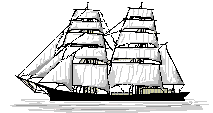
At the end of September, after a successful 42 day ocean crossing, the Columbia finally approaches the mouth of the Delaware River. Nerinckx and his recruits quickly disembark on the quay of Philadelphia. After weeks of swell and swinging they are all glad to walk on a steadier surface.
At first sight America seems very European, but this appearance vanishes quickly as one travels deeper into the country. The European version of the so called civilized world lies at the border of an unknown wilderness extending thousands of miles to the west as far as the Pacific Ocean.
The small group travels to Baltimore where they are received by monseigneur Maréchal. Here Neirinckx must leave his travelling companions. It is time for him to join his parish in Kentucky. Veulemans and Van Horzig will remain in Baltimore to as priests. The others leave the following day for Georgetown. The superior of the Jesuits in Maryland, Anthony Kohlmann, receives his new recruits with open arms and sends them to White Marsh to start their instruction. .
The plantation of White Marsh belongs for ages to the American Jesuits, but the noviciate is very recent. Before it opened in 1819 students lived in Georgetown. The simple wooden building provides all the necessary comfort amidst the vast fields, vineyards and woods of the plantation. At the head of the whole enterprise is Charles Van Quickenborne, 33 years, of Petegem in the Netherlands. At the end of 1817 this energetic Jesuit arrived from Flanders in Maryland to direct the new noviciate. He is assisted by Pierre Timmermans, of Turnhout, who was recruited during previous European trip of Neirinckx. Both Jesuits are not only responsible for the students, they direct the farm, manage the construction sites, control the slaves and provide the various religious task for a vast area surrounding the property.
1823
From White Marsh De Smet writes several unanswered letters to his old father. Communication between the United States and the Netherlands is uncertain and irregular, but the silence is difficult to bare ... In the end, after many months of anxiety and sadness, Pieter Jan receives three letters in a row and some money from his father. In his correspondence he reminds his son that he remains bitterly disappointed by his unexpected and furtive departure.
The noviciate depends almost entirely on the income of the plantation, but after years of monoculture the ground lost much of its fertility. The tobacco harvest is dwindling year by year and the plantation faces serious financial difficulties. The future of Whitemarsh, the noviciate and the twenty students becomes more and more uncertain. Charles Neale, who succeeded Kohlmann as provincial, considers to relocate the students. Just in time the bishop of New-Orleans, Dubourg, offers the Jesuits 85 hectares of land in Florissant, near St. Louis, and 4000 dollars to build a new noviciate. The bishop hopes this investment will help to convert the Indians of Missouri to the catholic church. The agreement is concluded at the end of March. Father Charles Van Quickenborne accompanied by Pierre Timmermans will direct the new mission. He selects three colored families for the new plantation in Florissant. Three Flemish brothers and seven students volunteer to go west, one of them is Pieter Jan.
On April 11 they start their long trip from Maryland to the mouth of Missouri in the Mississippi. They travel by foot with several carts over one of the first roads of the United States, the National Pike", destination Wheeling, Ohio. The first leg goes from Baltimore to Cumberland, through the Alleghany mountains. After 18 days of tireless walking the twelve clergymen and the three black families reach the banks of Ohio. In Wheeling Van Quickenborne grants them three days of rest. But on May the 3rd they all leave on two coupled boats and descend the Ohio towards Shawneetown. Travelling on the Ohio is not without danger! The river is full with obstacles and once under way they won't have to count on much assistance. They float through impenetrable forests. From time to time De Smet spots a group of huts, but most of the time there is not a human being in sight. The flatboats passes small hamlets which soon will become important cities, such as Cincinnati, Louisville and Madison. At Louisville it is necessary to organize a portage to circumvent the falls of Ohio. During the transport of their luggage they have a short meeting with an old acquaintance. It is the Father Neirinckx Father who accompanies a group of Sisters of Loretto on their way to Missouri. Meanwhile a local pilot, assisted by Josse Van Assche, steers the two boats through the difficult rapids of Ohio. When moored in Portland, the boats can be reloaded. They take to the river again and on May 22 Shawneetown comes in sight. The waterway to St. Louis is not very long, but towing the flatboats against the current of the powerful Mississippi is an impossible task for them. They sell the boats and with the revenue they pay the transport of their cargo to St. Louis. The party will walk the remaining 150 miles. It is a difficult hike through the south of Illinois where the roads and fields are flooded this time of the year. After eight days however they are finally in the sight of the city with at confluence of Missouri and the Mississippi. The next day the will cross the Mississippi. After a good nights rest they are on western bank of the river. Late in the evening they enter the city near Morgan Street. St. Louis with its 5000 French speaking inhabitants is still a very Latin city.
The last 15 miles! On June the 3rd 1823 they finally reach their destination. The voyage almost lasted two months and the had to walk 400 miles ! They reach St. Ferdinand de Florissant, a small village between St. Charles and St. Louis, close to the mouth of Missouri. On the property De Smet can see some buildings. Among them are the convent of the Sisters of the Sacred Heart and the parish church. Their own convent and their school will be built on one of the hills.